
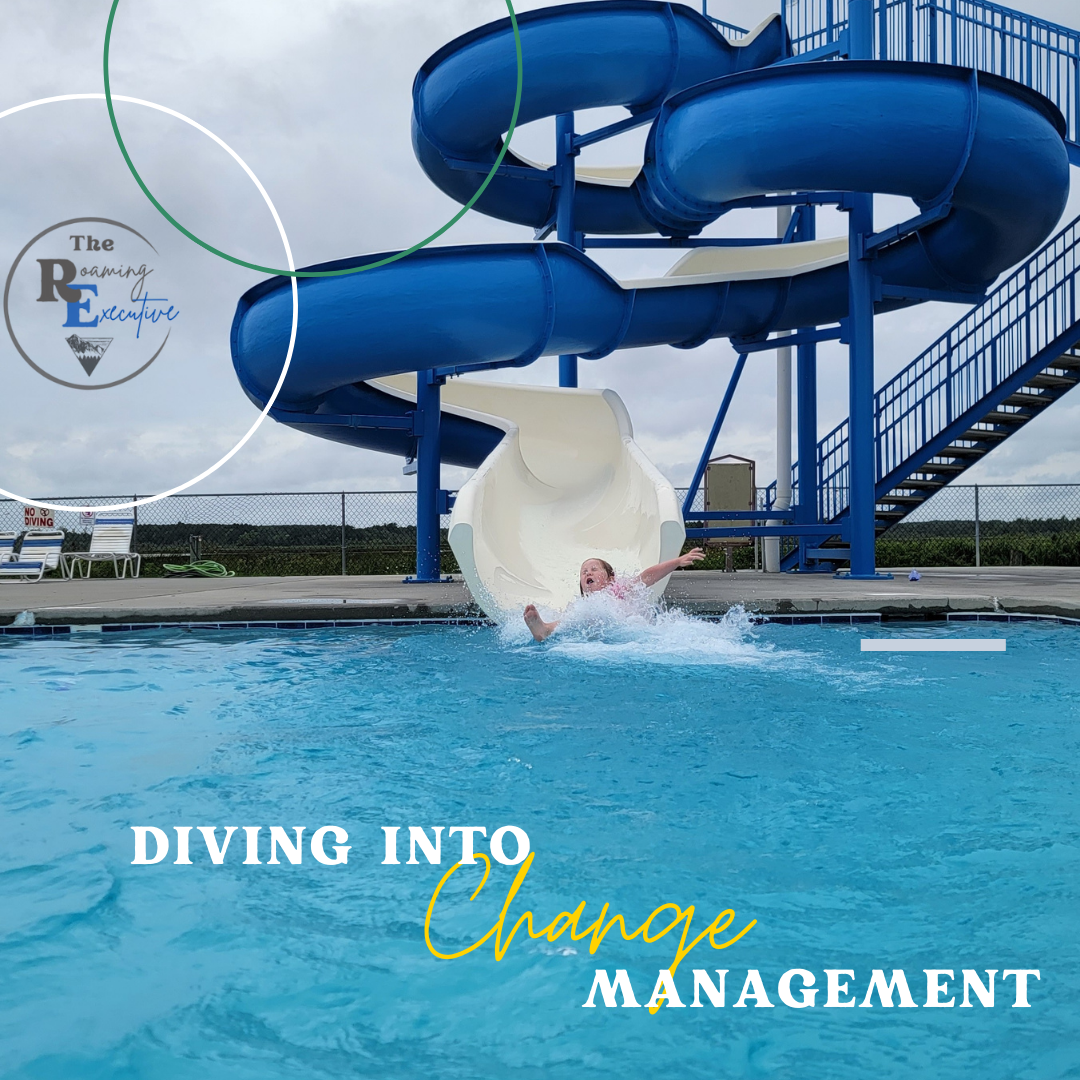
Managing change is hard. Whether you are a business owner, business leader or creating a change in your family life and structure, how you effectively plan and implement the changes doesn’t look all that different.
My company is currently undergoing some big changes, as is my family life. While the process to manage the change shouldn’t really look all that different, it did. The reason – my husband is an expert planner and if you don’t look closely, you would never realize what goes on behind the scenes before the project reaches takeoff. All his years of experience as an embarkation officer in the military have paid off in strides in terms of project and change management.
Planning our trip took 18 months and numerous iterations. We didn’t tell our families or kids (the key stakeholders) for a few months as we started the discussions. Once we realized we were serious and we started mapping out our plans and looking at new campers, we then communicated the possibility of change to our kids and got their opinions.
Step 1: Initiation, communication and buy-in from the team

Next, we started to shop for campers and made lists of our likes, dislikes, must haves and ‘wouldn’t touch with a 10 ft pole’ options. We also started making a list of what we wanted to accomplish and we informed our secondary stakeholders, our families. We knew the families would have mixed emotions and there would be some management that needed to take place.
My husband started to map our trip and we began researching and talking to people who had already done this type of excursion. Homeschooling was a big factor for us, so we spent a lot of time and energy looking at options and talking about what was important in this for our kids and us as the parents. We made some selections and the planning stages got well underway.
Step 2: Design, plan and alert other key stakeholders

Later, we changed at least half of these plans in the pre-rollout stage. Most of these things were kept at the management level. But, we did keep the discussion active with our kids throughout their entire school year, gauging their interest and concerns. We introduced them to online learning through a couple of different resources: Outschool, Smile Zemi and Duo Lingo. They already used Splash Learn at school. (For context, we are using Miacademy for the actual school platform)
Chris mapped the first year of our trip in Google maps and we joined Thousand Trails. We bought our camper and decided on some key changes to make it work for our needs. We let our kids pick out new items for their rooms to generate excitement and all the while we kept the conversation open and we were really honest with them about the parts that would be difficult. D-day (departure day) was fast approaching.
Step 3: Develop the project, start your communication, begin the preparations
In the spring of 2024, after our new camper arrived, we planned a test trip to western NC to expose us all to the new camper. Our old camper was a 30’ travel trailer. This one was a fancy, top-of-the-line 43’ 5th wheel. There are a lot of differences. The trip did not go off as planned. A few nights in, my husband and I were woken up in the middle of the night to all the alarms sounding and no power in the rig. After assessing for the next full day and night, during which time it happened again, we decided to head home and have it checked out. We were all disappointed, but thankful for the discovery of the issues ahead of full rollout.
Step 4: Test, discuss with the team, fix the issues that arise
It took several weeks to get the part and fix the camper, much longer than anticipated, which was a minor setback as we were set to depart in just a few short months. We decided to focus on the things we could control and firm up the plans for the first six months of our trip, including getting into the details of specific items we wanted to do in the northeast – the intended first leg of our trip.
The school year was winding down during this time and we were faced with EOG’s, recitals, choir performances, end of year performances and all the other things that come up in Maycember. I was also settling into a new role at work and we were in the midst of a massive reorganization. Mentally, my husband and I were both tired, and we were both trying to effectively manage all the change. (Side note: he was also attempting to offboard from our old company that we sold and from the HOA board, where he had been largely responsible for the implementation and oversight of a special assessment and some key fixes to the neighborhood infrastructure – the second was very hesitant to let him go)
Finally, after a very long waiting period, we got the camper back and we were able to get back on track with the final changes needed. We started to pack out our house, listed it with a rental agency and wrapped up some loose ends. And we settled in on final visits and plans with friends and family. We were on our way to a stress-free kick off….
Step 5: Implement the plans, review the progress and fully launch
…until it wasn’t. We moved the camper to a local campground down the road, got 85% of our stuff in and settled into our first night. Despite all of our many conversations with the team at hand about this not being a vacation, but reflecting our real work/school life, the reality of that was not hitting home. Sleeping in the same room was a test of patience to these two sisters and their parents. It did not go off without a hitch. And that first night and old familiar crept up as I woke up to bells and whistles and….no power. Time to put out some post-kick off fires, manage the team’s response to the changes and determine how to proceed.
Step 6: Put out post-kick off fires, manage the team’s response to change and determine next steps to proceed
After the first couple of nights, we scheduled a team meeting and rerouted the first two weeks of our trip. My husband needed to take the camper to Indiana so they could actually fix the problem (bad inverter), I would stay here and have my oldest’s final sleepover with her best friend at a friend’s beach condo and then we would meet at our second rendezvous point in VA, skipping the first official scheduled location.
During the team meeting, we discussed the impact of the recent changes and the internal response to those changes. We also had a discussion about how they might be handled differently and the benefits that could provide us all (sleep). The full team decided on the best path forward to better cope with the changes and manage our responses. I can’t say there have been no hiccups and setbacks, but we’ve proceeded much more smoothly.
Step 7: Review the changes with the team post-implementation, discuss what could be handled differently, iterate as needed and proceed toward the end goal
With all of this happening, there were still a lot of changes happening at work. I came to the realization that I was not handling the changes there nearly as effectively as I was in my own home (on wheels). I needed a pause and a reset…and so did the team. We aren’t rolling out school to the girls for a few weeks because one major change at a time is all they can handle. So, I decided to do the same for my team. I paused a major project I was working on and put the focus and emphasis on the reorganization. I got much more intentional with the conversations around this change and decided to visit the steps above.
Change is hard. And again – often as entrepreneurs and business leaders we want to go fast so we can realize the end vision as quickly as possible. But, you can only move a mountain one rock at a time. And rocks don’t have emotions, and kids, and competing priorities for mental bandwidth. Settling in on one major change, maintaining communication with the team, working together and iterating as needed are necessary parts of managing changes, whether at home or ‘in the office’.
Leave a Reply